The Screen Takeover
Let me complain for a second.
Every new car has the same interior now. A giant screen sticking out of the dashboard. A few vents. Some glossy black plastic that shows every fingerprint. And maybe two buttons if you're lucky.
That's not design. That's a tablet glued to a sofa.
I get it. Screens are cheap. Screens are easy to update. Screens let car companies change things without changing hardware.
But screens also make every car feel the same. A Tesla and a Ford and a Kia and a BMW. Inside? Hard to tell them apart.
And here's the thing nobody says. Screens are worse to use. You can't feel them. You have to look at them. Every time you want to change the temperature. Every time you want to turn on the seat heaters. Every time you want to do anything at all.
That's not progress. That's cost cutting pretending to be innovation.
So let me take you back. To a time when interiors had buttons. And shapes. And actual personality.
Interior One: Early 2000s BMW (E39 5-Series / E46 3-Series)
The one that pointed everything at the driver
BMW in the early 2000s understood something most car companies have forgotten.
The driver is the most important person in the car.
Not the passenger. Not the person in the back. The driver.
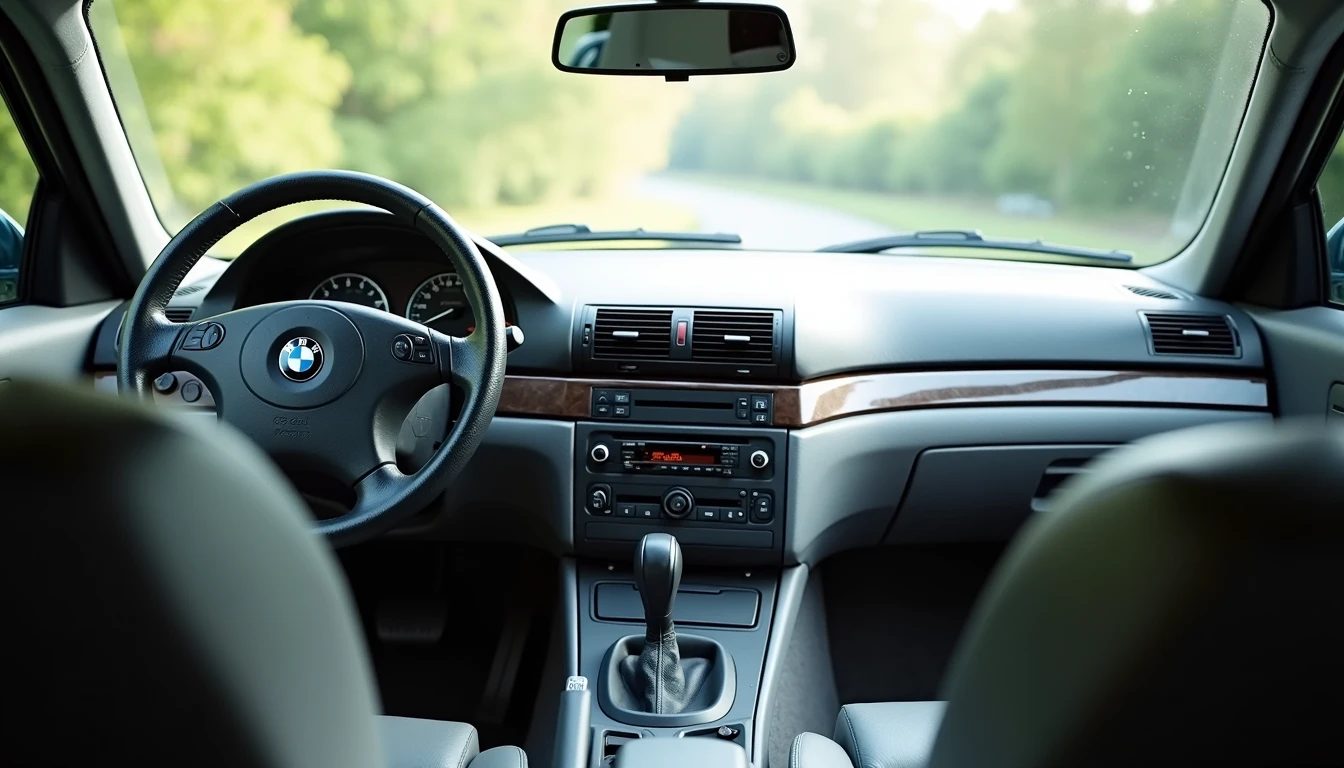
So they angled the whole center console toward the driver. Every button. Every vent. Every control. All pointing at the person holding the wheel.
You didn't have to reach across the car to change something. You just moved your hand a few inches. Everything was right there.
And the buttons. Oh, the buttons.
They were big enough to find without looking. They had different shapes so you could tell them apart by touch. They clicked when you pressed them. Satisfying clicks. The kind that tell you something happened.
Climate control? Physical buttons. Radio presets? Physical buttons. Volume knob? Physical and perfectly placed.
You could operate that car with your eyes on the road. The way it should be.
The materials were good too. Soft touch plastics where it mattered. Hard plastics where it didn't. Not luxury. Just solid. Like the car would last forever.
And many of them have. You still see E46s and E39s on the road. The interiors hold up. Not because they're fancy. Because they're right.
The screen? There wasn't one. Just a small radio display. That's it.
And you know what? Nobody missed the screen.
Interior Two: Late 1990s Volvo (850 / S70 / V70)
The one that felt like a cozy Swedish living room
Volvo did something completely different.
They made the interior feel like a room. A comfortable, warm, slightly quirky room.
The seats. Let me start with the seats. Volvo seats from this era are legendary. Not because they look sporty. Because they support your back in exactly the right places. You can drive for eight hours and get out feeling fine. That's engineering. Real engineering.
The fabric. Volvo used cloth that felt like something from a nice sofa. Not cheap cloth. Not scratchy wool. Something in between. Durable. Breathable. Comfortable in summer and winter.
The dashboard was a big curved thing. Like a shelf. It wrapped around you. Made the car feel wider. Safer. Cozier.
And the buttons were laid out like a stereo system. Big. Simple. Easy to understand. The climate control had an actual picture of a person. Point the arrows where you want the air to go. That's it. No menu diving. No confusion.
Volvo also put the ignition on the center console. Not on the steering column. Between the seats. So you reached down to start the car. Small thing. But it made the car feel special. Like the designer actually thought about where things should go.
The whole interior said one thing. "You're going to spend a lot of time here. We want you to be comfortable."
No screaming. No flash. Just smart design for actual humans.
Modern Volvos are nice. But they have big screens now. They lost some of that cozy feeling. The old ones still have it.
Interior Three: Mid 1990s Mazda MX-5 (NA Miata)
The one that knew less is more
The Miata interior is almost stupidly simple.
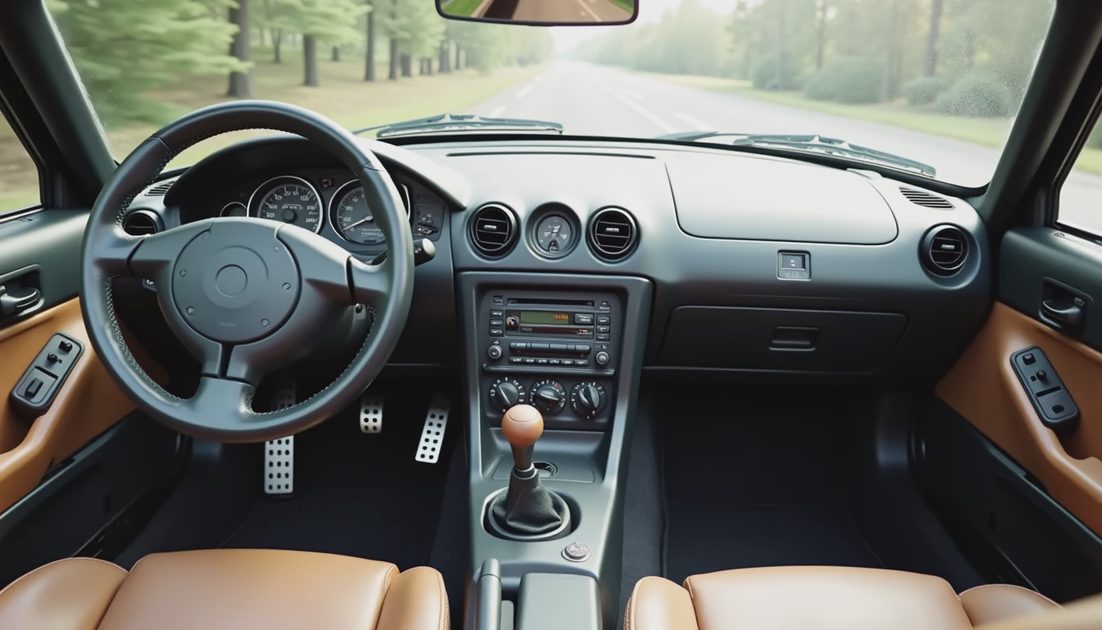
Two seats. A steering wheel. A shifter. Three pedals. Four vents. A radio. Climate sliders. That's basically it.
And that's exactly why it works.
Everything in a Miata is about driving. Not about luxury. Not about technology. Not about impressing passengers.
The shifter is right next to the steering wheel. Perfect position. You can shift without moving your upper body at all.
The gauges are big and clear. Speedometer. Tachometer. That's all you really need. Fuel and temperature off to the side.
The radio is small and low. Not the focus. Just there if you want it.
The climate controls are sliders. Simple. Old school. You don't even have to look at them. Just slide until the temperature feels right.
The seats are low. The windshield is low. The whole car wraps around you like a glove.
And here's the best part. The Miata has door pulls. Actual straps you grab to close the door. Not electric buttons. Not hidden handles. Just a leather strap. It's lightweight. It's simple. It's perfect.
No screens. No distractions. No nonsense.
Every time you sit in an NA Miata, the car says one thing. "Drive me." Not "watch a movie on me." Not "look at my ambient lighting." Just "drive me."
That's honest. And honest never goes out of style.
What These Three Share (And New Cars Lost)
The common thread
Let me point out what these interiors have in common. Because it's important.
Buttons you can feel. Every single one of these cars has physical controls. You don't have to look at them. You just reach and press. That's safer. And it feels better.
Clear priorities. BMW prioritized the driver. Volvo prioritized comfort. Mazda prioritized simplicity. Each one made a choice. And everything else supported that choice.
No fake materials. BMW used actual materials. Volvo used fabric that felt like fabric. Mazda didn't try to be something it wasn't. No fake carbon fiber. No fake wood. No fake aluminum. Just real stuff.
Personality. You could sit in each one blindfolded and know which car you were in. They felt different. They looked different. They had opinions.
Things were in the right place. Switchgear. Vents. Cup holders (even if Miata cup holders are famously bad). Someone thought about where your hands actually go.
Now look at new cars. Most of them have none of this.
Giant screens. Same layout. Fake materials. No personality. Controls buried in menus.
We lost something. And we didn't get much in return.
The Screen Defense (I'll Be Fair)
Okay, screens aren't all bad
Let me be fair for a second.
Screens can do things buttons can't. Navigation. Back up cameras. Apple CarPlay. All good things.
I use CarPlay every day. I'm not a Luddite. I don't want to go back to a paper map.
But here's the problem. Car companies use screens as an excuse. "We have a screen now, so we don't need buttons."
That's lazy.
You can have a screen and buttons. You can have CarPlay and a volume knob. You can have navigation and physical climate controls.
Some car companies do this well. Mazda still has a knob. BMW still has physical buttons for basic things. Porsche still has buttons everywhere.
The ones that don't? They're saving money. Not making your life better.
So I'm not anti-screen. I'm anti-lazy. And most new car interiors are lazy.
The Interior Test I Use
Try this next time you're in a new car
Here's a simple test.
Close your eyes. Reach for the climate control. Can you find it? Can you change the temperature without opening your eyes?
Now reach for the seat heater. Same thing.
Now try to change the radio station.
If you can do all of that without looking? Good interior. The designers thought about you.
If you have to open your eyes and stare at a screen? Bad interior. The designers thought about their budget.
Test this on the three cars I mentioned. BMW E46? Easy. Volvo 850? Easy. Miata? Very easy.
Test it on a new Tesla? Good luck.
That's not progress.
Why I Still Want These Old Interiors
And you might too
I don't want to give up modern reliability. Or modern safety. Or modern fuel economy.
But I want my interior to feel like my space. Not a tablet store.
I want buttons I can find by touch. I want materials that feel good. I want a car that has personality.
The three interiors I talked about? They're not perfect. The BMW had peeling door handles. The Volvo had weird air vents. The Miata had terrible cup holders.
But they had soul. They felt like someone cared. Someone asked "how does this actually work for a human?"
That's rare now. And it makes the old ones feel better than most new cars.
Not retro. Not nostalgic. Just better designed for actual use.
The Ones Getting It Right Today
Hope for the future
Some new cars still understand this.
Mazda. Still has a knob. Still has physical controls. Still cares about interiors. The current Mazda3 interior is genuinely good. No giant screen. Everything in reach.
Porsche. Buttons everywhere. Physical controls. Expensive, yes. But they didn't give up on good design.
Genesis. Their interiors are beautiful. Physical controls for the important stuff. Materials that feel expensive. Screens are there but not dominant.
BMW (some models). The newest ones are screen heavy. But the previous generation? Good balance. Screen existed. Buttons existed too.
Honda Civic (new). Surprisingly good. Physical knobs. Physical buttons. Clean layout. Feels like someone thought about it.
So not all hope is lost. But you have to look. Most new cars still fail the eyes-closed test.
What I Drive Now
One foot in the past
My car is from the early 2000s. BMW coupe.
No screen. Just buttons. Lots of buttons.
The interior is angled toward me. Everything is in reach. I can change the temperature without looking. I can change the radio station without taking my eyes off the road.
Is it as safe as a new car? No. Is it as efficient? No.
But every time I sit in it, I feel something. Presence. Intention. A designer who cared.
That feeling is worth something. To me, it's worth a lot.
I'm not saying you should buy an old car. But I am saying you should pay attention. Next time you're in a new car, notice what's missing. Notice the screen. Notice the glossy plastic. Notice how hard it is to do simple things.
Then sit in an old BMW. Or an old Volvo. Or an old Miata.
You'll feel the difference.
And you might not want to go back.