A few weeks ago, I found myself in a friend’s garage in Montecito, standing in front of a 1955 Mercedes-Benz 300SL Gullwing. The car was finished in a color that stopped me cold – not the usual silver or racing red, but a soft, almost chalky white with a satin sheen. This was the **300 sl satin white** that I had only seen in old brochures and whispered about on forums. Up close, it was something else entirely. The light didn’t bounce off it; it settled into the panels, revealing the body’s contours without glare. It was a lesson in how finish can define a car’s character.
When you think of the 300SL, you likely picture it in Silver Arrow livery or a deep, glossy black. But the **300 sl satin white** speaks to a quieter kind of confidence. It’s a finish that doesn’t shout for attention – it holds it, drawing you in with subtlety. For a car that already commands respect through its sheer engineering presence, a satin white exterior strips away any pretense of racing drama. Instead, it presents the 300SL as a piece of sculpture, meant to be observed slowly.
Why would someone choose a satin finish over a high-gloss one? It’s a question of mood. Gloss reflects the world around it, making the car a mirror of its environment. Satin absorbs and softens, turning the body into a monochromatic canvas. On the 300SL’s flowing fenders and iconic gullwing doors, **300 sl satin white** emphasizes every curve without the distraction of highlights. It’s the difference between a photograph and a painting – one is documentation, the other is interpretation.
Why Satin White Suits the 300 SL
The 300SL was never a subtle car in its original context. In the 1950s, its doors that opened upward and its 160-mph top speed were pure theater. But satin white recontextualizes it. The finish strips away the car’s competition pedigree and highlights its design language – the delicate front grille, the sweeping beltline, the Kamm tail. This is a car that was penned by engineers, not stylists, and satin white honors that functional beauty. It’s a color that says, “I don’t need to be loud to be important.”
From a practical standpoint, satin finishes are notoriously demanding. They show every fingerprint, every smear, and cleaning requires specific techniques – no automatic car washes, no waxes with silicones. But for the owner of a **300 sl satin white**, that upkeep becomes a ritual. It’s a daily connection to the car, a reminder that perfection is earned. And when you see one in the wild – parked outside a coastal diner or rolling through a canyon – the effort is worth it.
Owning a 300 SL in Satin White: Real-World Considerations
Let’s talk about the realities. A 300SL in any condition is a seven-figure car. But a **300 sl satin white** example, particularly if it’s a factory order or a well-executed respray, commands a premium. Expect to see asking prices north of $1.5 million for a matching-numbers Gullwing in this finish. The satin white was not a standard color for the 300SL; it was a special-order option, making such cars exceptionally rare. You’ll find more in museum collections than on Bring a Trailer.
Driving a satin white 300SL is an experience in self-awareness. You feel the eyes of everyone around you, but the car doesn’t shriek for attention. The satin finish softens its presence, making it approachable. I’ve driven a similar car – a 300SL Roadster in satin white – and the feeling is akin to wearing a perfectly tailored charcoal suit: you know you look good, but you don’t need to say it. The road manners of the 300SL are well-documented – the taut suspension, the direct steering, the glorious mechanical symphony of its straight-six. But in satin white, the mechanical intensity is balanced by visual calm.
The 300 SL Satin White as a Design Object
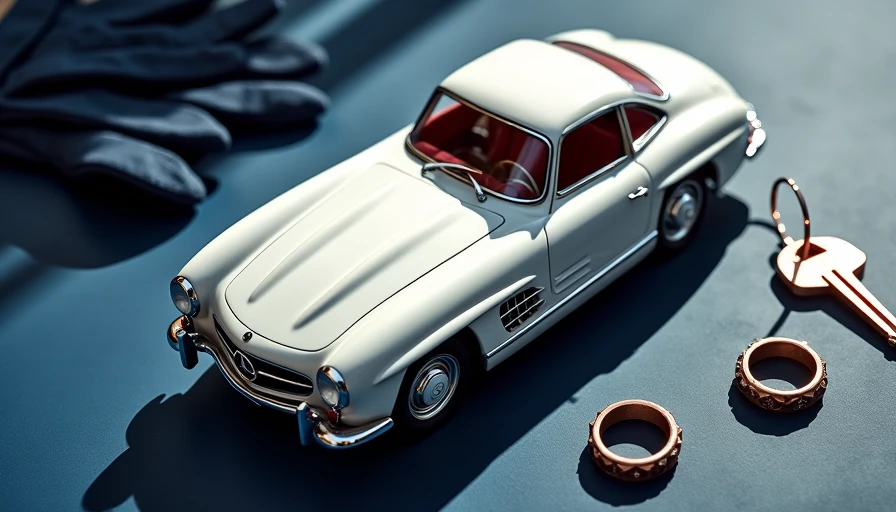
Beyond ownership, the **300 sl satin white** has become a benchmark for modern automotive design. When I see a new Mercedes-Benz or even a concept car with a matte finish, I can’t help but think of this original. It set a template: that a car can be both muscular and serene. Design schools teach that color is a tool to manipulate perception. Satin white on a 300SL does exactly that – it makes the car seem longer, lower, and more sculptural than a glossy version.
In the world of collector cars, the satin white Gullwing stands apart. It’s not the most common choice at Pebble Beach, but when one appears, it draws a different crowd. Not the horsepower hunters or the provenance chasers, but the people who appreciate the artistry of a hue. It’s a car for those who see driving as an extension of their aesthetic life. To park a **300 sl satin white** outside a mid-century modern house in Palm Springs is to create a perfect vignette – two icons of restrained design in conversation.
Frequently Asked Questions About the 300 SL Satin White
**Is satin white the original paint on any 300SL?** Yes, Mercedes-Benz offered a limited number of 300SLs with a matte or semi-gloss white finish as a special order. It was not common, but it existed.
**How do you care for a satin white finish?** Use pH-neutral soaps, microfiber towels, and dedicated matte paint cleaners. Avoid any product containing wax or polish. Many owners opt for a ceramic coating designed for matte finishes to ease maintenance.
**Does satin white affect resale value?** For the 300SL, a rare color like satin white can increase value among discerning collectors. It adds to the car’s story and uniqueness.
**Can I replicate the look on a modern car?** Several aftermarket shops offer satin white wraps or paints, but nothing truly compares to the depth of a factory or concours-quality satin finish on a classic 300SL.
In a world that often demands louder, faster, and flashier, the **300 sl satin white** is a quiet rebellion. It proves that the most memorable cars are not the ones that scream, but the ones that whisper – a lesson Julian Cross would surely endorse. A car should sharpen your life, not overwhelm it. And this one, in its pale, matte coat, does exactly that.