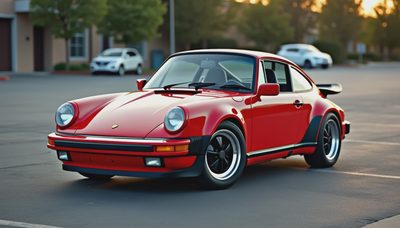
There’s a particular stillness that settles over the garage when you stand in front of an antique sports car. It’s not just the shape—though the forms are often breathtaking—it’s the sense that every line was drawn with intent, and every mechanical component asks something of you. In an age of driver aids and digital dashboards, **antique sports cars** offer a connection that feels increasingly rare. They don’t insulate you from the road; they invite you to participate.
What is it about these older machines that draws us so deeply? For me, it’s not nostalgia alone. It’s the way they reward attention, the way they demand your hands and feet to work in concert with a carbureted heartbeat. Owning an **antique sports car** isn’t about proving anything to anyone. It’s about enriching your own experience of driving—of feeling the steering wheel transmit every grain of tarmac, of hearing the intake sing as you wind through a canyon.

What Defines an Antique Sports Car?
The term “antique” in the automotive world typically refers to vehicles built 25 years or older, but **antique sports cars** occupy a more specific niche. They are lightweight, often two-seaters, designed primarily for driving pleasure rather than practicality or luxury. Think of a 1960s Lotus Elan, with its delicate glass-fiber body and pop-up headlights, or an Alfa Romeo Giulietta Spider, whose proportions seem to have been drawn by a tailor. These cars prioritized balance over brute force, agility over sheer speed.
Unlike modern performance cars that rely on electronics to manage power, an **antique sports car** trusts the driver. The pedals are close together, the shifter moves through an open gate, and the steering has no power assist—you feel every camber change in your palms. That honesty is what separates them from their descendants. They are not relics; they are instruments of focus.
The Driving Experience That Modern Cars Can’t Replicate
I’ve driven plenty of modern sports cars that are objectively faster, more comfortable, and safer than anything from the 1960s. Yet none of them have made me feel as present as a well-sorted MGB or a Porsche 356. There’s a rawness to **antique sports cars** that modern engineering has smoothed away. The vibrations, the smells of hot oil and gasoline, the way the chassis communicates every road imperfection—these are not flaws. They are the language of the car.
When you drive an **antique sports car**, you don’t just go from point A to point B. You experience the journey in a tactile, almost meditative way. The gearbox requires double-clutching on downshifts, the brakes need a firm press, and the carburetors need a gentle foot. It’s a conversation between you and the machine, not a passive ride. That’s why so many of us who own these cars take the long way home.

Why Collectors and Enthusiasts Still Seek Them Out
Part of the allure is financial—many **antique sports cars** have appreciated steadily over the past decade. A well-maintained Jaguar XK150 or a Triumph TR6 can be a sound investment, but the real value is emotional. These cars carry stories. They’ve been driven by people who loved them, raced on weekends, or simply enjoyed on Sunday morning drives. There’s a community around them, too—concours events, vintage rallies, and small gatherings where owners share tips on tuning SU carburetors or replacing Lucas wiring.
But beyond the social aspect, owning an **antique sports car** teaches patience and craftsmanship. You learn to diagnose problems by sound and feel. You find yourself buying tools you never knew you needed. And when the engine fires after a long winter, there’s a satisfaction that no keyless ignition can match.
Practical Considerations for Owning an Antique Sports Car
Let’s be honest: these cars are not daily drivers for most people. They require more maintenance than a modern vehicle, and parts can be harder to find. But that’s part of the ritual. You develop relationships with specialized mechanics and parts suppliers. You learn to budget for the occasional surprise—a cracked cylinder head or a worn-out differential. Insurance is relatively affordable if you purchase agreed-value coverage through companies like Hagerty or Grundy. Expect to pay roughly $300 to $800 per year for a typical **antique sports car**, depending on its value and your driving history.
Storage is also key. A dry garage is non-negotiable, and you’ll want to keep a trickle charger on the battery. Regular drives are essential—sitting idle is harder on these cars than frequent use. But if you’re willing to embrace the quirks, the rewards are profound.
How to Choose Your First Antique Sports Car
If you’re new to the world of **antique sports cars**, start with something manageable. The Mazda Miata (NA or NB) is a fantastic entry point: affordable, reliable, and deeply engaging. For a more traditional experience, look at an MGB or a Porsche 914. Both have strong parts support and active enthusiast communities. Avoid the temptation to buy the cheapest example you can find—rust and mechanical neglect can turn a bargain into a money pit. Instead, pay a bit more for a car with documented history and recent mechanical refresh.
Take your time. Attend a few car shows, sit in different models, and talk to owners. The right **antique sports car** will call to you. It will fit your height, your driving style, and your budget. And when you find it, you’ll understand why these machines have endured for decades.
Conclusion
Antique sports cars are not for everyone. They demand effort, patience, and a willingness to engage with the mechanical world. But for those who answer that call, they offer something priceless: a driving experience that sharpens your senses and connects you to the road in a way that modern cars have forgotten. If you’ve ever felt that pull, I encourage you to explore it. Find a quiet road, a well-sorted example, and let the car remind you why you love to drive.