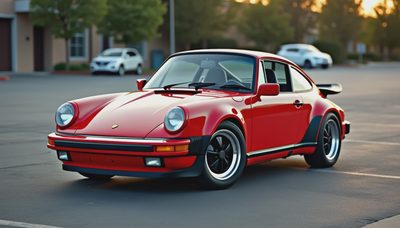
There is a quiet magnetism to a vintage sports car that no modern machine quite replicates. It’s not just the curves of an aluminum body or the scent of aged leather—it’s the way the car demands your attention, asks for patience, and rewards you with a connection to the road that feels almost personal. I’ve spent years around these cars, and I still find that the best vintage sports car doesn’t overwhelm with horsepower; it sharpens your senses instead.
What Defines a Vintage Sports Car?
For the purposes of this conversation, let’s consider a vintage sports car as one built between the late 1950s and the early 1970s—an era when design was led by pencil and clay, not wind tunnels and computer simulations. These cars are defined by lightweight construction, modest power by today’s standards, and an intimacy that comes from direct mechanical connection. Think of an early Porsche 911, an Alfa Romeo Giulia Spider, or a Triumph TR6. They are not perfect. They are not fast in the way a modern GT3 is fast. But they offer something rarer: a sense of occasion every time you turn the key.
What makes a vintage sports car special is its honesty. The steering talks to your palms, the suspension communicates every ripple in the tarmac, and the engine breathes in a way you can feel through the pedals. There is no electronic filter between you and the machine. That rawness is the very quality that enthusiasts treasure—and that, frankly, makes these cars a joy to drive on a winding coastal road at dawn.
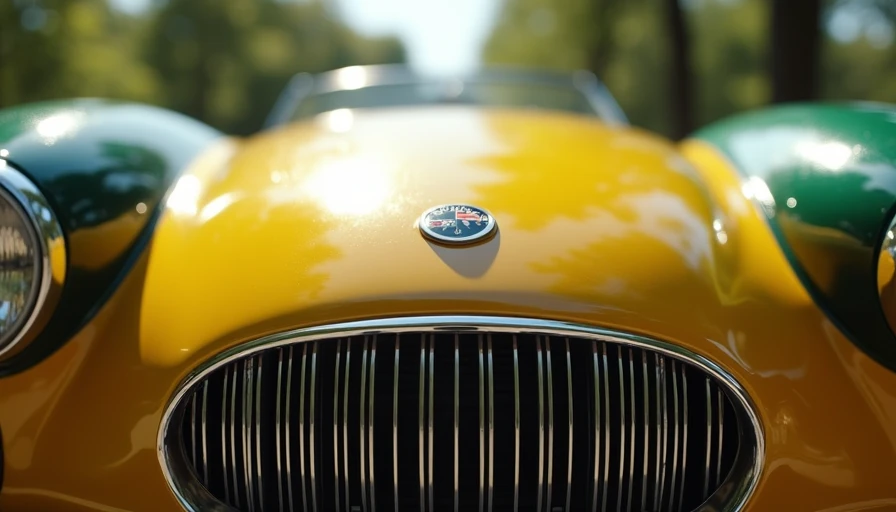
The Driving Experience: More Than Nostalgia
I’ve often heard people dismiss vintage sports cars as impractical relics. But drive one with an open mind, and you’ll realize they offer a kind of engagement that modern cars have traded away for comfort and safety. The throttle response is immediate. The gearbox—if you find a good one—snicks into place with a precision that reminds you driving is a skill, not a passive activity.
Take the Alfa Romeo Giulia Spider, for instance. Its 1.6-liter four-cylinder engine produces around 90 horsepower—nothing impressive on paper. Yet on a back road, the way the car flows through corners, the way you must anticipate and plan your inputs, makes every journey feel like a dance. The vintage sports car isn’t about speed; it’s about rhythm. It sharpens your life, not overwhelms it.
Of course, this experience requires maintenance. A vintage sports car will ask for attention: regular tune-ups, attention to rust, and a willingness to accept quirks. But those who enjoy working on their own cars—or who have a trusted mechanic—find this part of the ownership ritual deeply satisfying. The car becomes a project, a companion, a story.
Practical Considerations: Ownership in the Real World
Can a vintage sports car serve as a daily driver? It depends on your tolerance. I’ve known people who commute in their 1960s Porsche 912 without issue, and others who drive a Jaguar E-Type only on weekends. The key is matching the car to your lifestyle. If you want reliable transportation, a later model with electronic fuel injection and disc brakes might suit you better. If you crave authenticity, a carbureted car with drum brakes and a live axle will deliver more drama—and more maintenance.
Here are a few practical points to consider:
- **Rust and bodywork**: Most vintage sports cars from this era had thin sheet metal. Inspect panel gaps, floor pans, and suspension mounting points carefully.
- **Engine and drivetrain**: Parts availability varies widely. For British and Italian cars, some parts can be hard to find. German cars like Porsche and BMW often have robust aftermarket support.
- **Insurance**: Specialty insurers like Hagerty or Grundy often offer agreed-value policies that reflect the car’s true worth, which can be surprisingly affordable.
- **Storage**: A garage or carport is essential. These cars do not like damp climates, and a good cover or dehumidifier helps.

Choosing the Right Vintage Sports Car for Your Life
If you’re considering buying a vintage sports car, start with your own priorities. Do you want a car that turns heads at a cars and coffee? Or one you can actually drive across a state on a weekend? A Triumph TR6 is rowdy and loud, full of British character. A Porsche 911 from the 1960s is more refined but far more expensive. An MGB is affordable and parts are everywhere, but it won’t deliver the same driving depth.
I always tell people to drive three or four examples before committing. Each car has its own personality. The one that feels right will not be the one with the lowest miles or the perfect paint, but the one that makes you smile without trying. That is the magic of a vintage sports car: it appeals to emotion, not logic—and yet, with proper care, it can become a perfectly usable part of your life.
Conclusion
The vintage sports car remains relevant because it offers something lost in the modern era: a tactile, honest relationship with driving. It doesn’t require you to be a mechanic or a collector; it simply asks that you appreciate the art of motion. For those who answer the call, the reward is a companion that sharpens every journey—and a piece of automotive history that still speaks the language of pure fun.