There’s a reason old sports cars refuse to fade into nostalgia. In an era of turbocharged everything and digital dashboards, these analog machines hold a specific gravity—one that has nothing to do with horsepower numbers or lap times. I’ve spent years behind the wheel of everything from a faded Triumph TR6 to a well-worn Porsche 911 (the air-cooled kind), and what I keep coming back to isn’t speed. It’s the way they make you participate. Old sports cars demand your attention, reward your inputs, and leave you with a memory long after the ignition is off.
The Design Language That Ages Gracefully
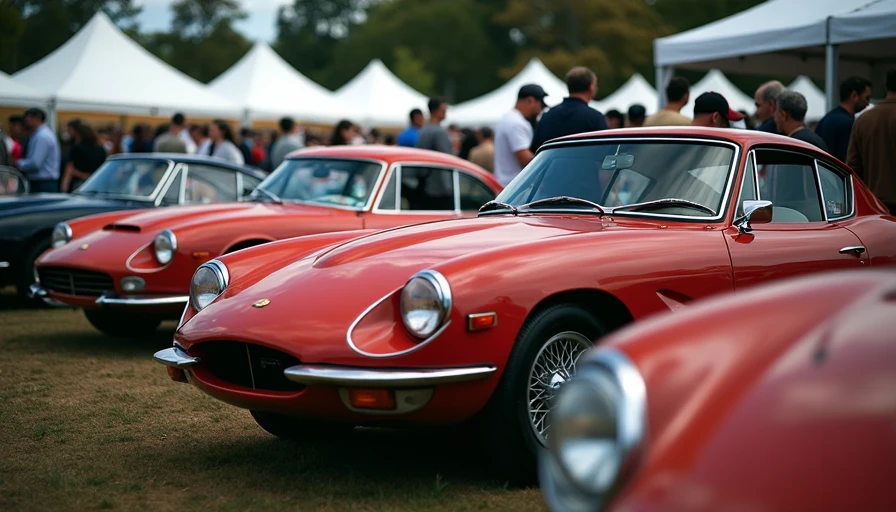
Walk any cars and coffee gathering, and you’ll notice that the crowd around old sports cars tends to linger. It’s not just nostalgia—it’s proportion. Cars like the Alfa Romeo Giulia Spider or the Jaguar E-Type don’t shout; they hold space. Their lines were drawn by people who understood that a fender should flow, not flare. Even modestly priced old sports cars, such as the Mazda RX-7 or the Datsun 240Z, have a visual coherence that many modern designs lack. The secret? Restraint. These cars were designed before aerodynamics and safety regulations dictated every bulge. They look like they were carved, not extruded.
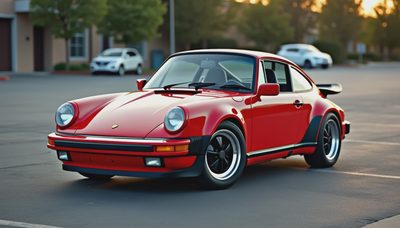
The first time I parked my 1971 Porsche 911T next to a contemporary 911, the difference was startling. The old car sat lower, narrower, more intent. It didn’t need a giant grille or angry headlights to announce itself. That quiet confidence is what makes old sports cars so appealing. They reward the patient observer.

Driving Feel You Can’t Replicate
Driving an old sports car is a tactile conversation, not a digital command. The steering wheel transmits every ripple of the asphalt, the throttle pedal moves with mechanical directness, and the gearshift—often a chrome lever with a wooden knob—slides into each gate with a satisfying click. There’s no traction control smoothing over your mistakes, no adaptive suspension filtering out the road’s character. You are the system.
Consider the Lotus Elan. It weighs less than 1,600 pounds, produces around 100 horsepower, and yet it’s one of the most celebrated driver’s cars ever built. Why? Because every input produces an immediate, predictable response. You don’t just drive an Elan; you wear it. That intimacy is what today’s heavy, powerful machines often miss. Old sports cars remind us that driving is a physical skill, not a supervisory task.
Of course, not all old sports cars are created equal. British classics like the MG B offer a more relaxed, top-down experience, while Italian exotics like the Ferrari 308 demand a firmer hand. The common thread is communication. These cars talk to you—sometimes in broken English, but always honestly.
Practical Ownership in a Modern World
You don’t need a warehouse or a six-figure budget to own an old sports car. Many models remain surprisingly affordable and usable. A clean Porsche 944 can be found for under $15,000, offering reliable performance and decent parts availability. The Mazda Miata (NA) is the obvious choice for reliability, but don’t overlook the Toyota MR2 or the Alfa Romeo Spider—cars that can be enjoyed on weekend backroads and still driven to the grocery store.
That said, ownership requires a shift in mindset. You won’t get blind-spot monitors or Apple CarPlay. You will get engine smells, the occasional drip of oil on the driveway, and conversations with mechanics who actually understand carburetors. But that’s part of the deal. Old sports cars ask for a little more of your time in exchange for a lot more of your attention. And for many of us, that trade-off is worth it.
Which Old Sports Cars Are Worth the Search?
If you’re new to the world of old sports cars, start with something simple. The Datsun 240Z is a great entry point—inline-six, rear-wheel drive, and a design that channels Jaguar E-Type without the running costs. For a more European flavor, the Alfa Romeo Spider (1990s Series 4) is a reliable, pretty drop-top that’s cheap to buy and easy to maintain. If you want something rare, consider the BMW 2002—not a traditional sports car, but a sporty coupe that handles with panache.
On the pricier side, air-cooled Porsche 911s have become collectibles, but the 996 generation remains undervalued and offers modern reliability with classic proportions. Similarly, the Lotus Esprit is dramatic, iconic, and surprisingly livable for a 1970s supercar.
The key is to buy based on condition, not just model. A well-maintained old sports car will always feel better than a neglected exotic. Look for complete service histories, recent rubber hoses, and rust-free chassis. Expect to spend a few thousand after purchase on sorting—it’s part of the romance.
The Ritual of Care and Connection
Owning an old sports car isn’t just about driving; it’s about the rituals that come with it. Washing the car becomes a meditation. Checking tire pressures and fluids becomes a weekly conversation. That click of a perfectly tuned engine on a cool morning feels like a shared secret. These cars don’t tolerate neglect, but they reward care. They teach patience, attention, and the beauty of mechanical honesty.
In a world that moves too fast, old sports cars slow you down. They ask you to be present. And when you pull into the driveway after a long drive, turn off the ignition, and hear the crackle of cooling exhaust, you know you’ve experienced something that no modern gadget can replicate. That’s why old sports cars still matter. That’s why they always will.
*A car should sharpen your life, not overwhelm it.*