The Romantic Lie
Let me tell you a lie we tell ourselves.
"Old cars have character."
It's true. Some do. The good ones. The ones that were designed by people who cared about something other than profit margins.
But here's the other truth we don't say enough.
Some old cars are just bad. And we call it character because we don't want to admit we made a mistake.
No air conditioning in August isn't character. It's hot.
No power steering in a parking lot isn't character. It's a workout.
Breaking down on the side of the road isn't character. It's a Tuesday ruined.
I've owned cars like this. I've made excuses for them. "It's part of the experience." "You wouldn't understand."
But after a while, the excuses start to feel empty. And the car starts to feel like a job.
That's when you have to ask the question. How much inconvenience is too much?
The Leaky British Car Phase
Let me confess something.
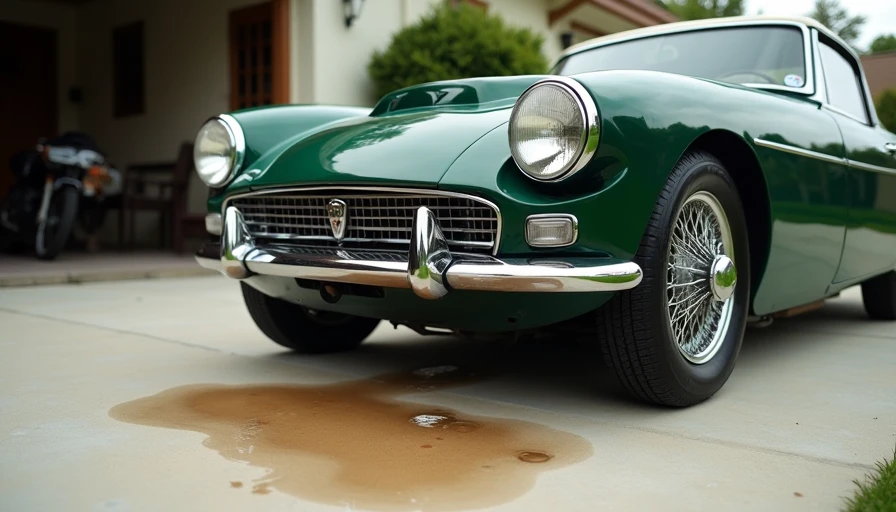
I owned an old British car. I won't say which one. You can guess.
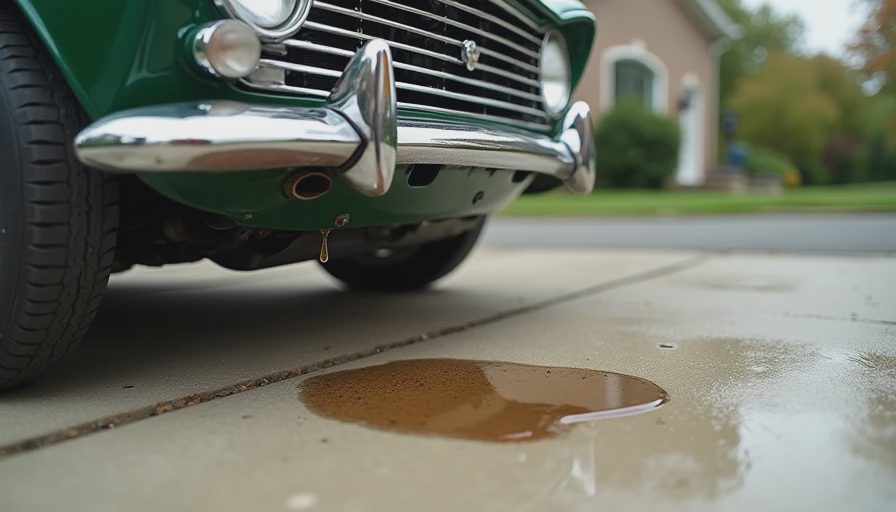
It leaked. Everything leaked. Oil on the driveway. Water through the windows. Air through the seals.
I spent more time wiping things down than driving.
And I told myself it was character. "That's just how they are." "Part of the charm."
No. That's not charm. That's a car that wasn't very well built.
The British made beautiful things. Gorgeous shapes. Wonderful sounds. Incredible steering feel.
But they also made things that fell apart. And we've spent forty years romanticizing the falling apart part.
I sold that car. And I don't miss it.
Not because it didn't have character. Because the character came with too much other stuff. Stuff I didn't sign up for.
The Line Between Character and Broken
Here's how I think about it now.
Character is something that adds to the experience. It makes the car feel unique. Special. Alive.
Inconvenience is something that subtracts from the experience. It makes the car harder to live with. Less enjoyable. Less worth it.
The line is different for everyone. But here's my version.
Character: A heavy clutch that reminds you you're driving something real.
Inconvenience: A clutch so heavy your leg hurts in traffic.
Character: An engine that sounds angry at 5,000 rpm.
Inconvenience: An engine that won't idle on a cold morning.
Character: A stiff suspension that tells you exactly what the road feels like.
Inconvenience: A suspension so stiff you avoid certain streets.
Character: A manual transmission that rewards smooth shifting.
Inconvenience: A manual transmission that grinds every time you rush.
See the difference?
One makes you feel more connected. The other makes you wish you'd stayed home.
The Cars I've Kept Vs. The Cars I've Sold
Let me be honest about my own garage.
The cars I've kept have character. But they also work.
The old BMW coupe? The windows go up. The heat works. The AC is cold enough. It starts every time. It doesn't leak. It doesn't leave me stranded.
But it also has a heavy clutch. A stiff ride. No backup camera. No traction control. A shifter that demands precision.
That's character. Inconvenient sometimes. But not ruinous.
The cars I've sold? The British one. The modified one with the too-stiff suspension. The project car that was always a project.
Those cars crossed the line. They asked too much. They took more than they gave.
Character is a relationship. It should be reciprocal. You give some patience. The car gives some joy.
When the joy stops? The character isn't worth it anymore.
The Daily Driver Problem
Here's where this gets real.
If a car is your only car, the line is different. Much stricter.
Because you can't afford to have a car that won't start on a Monday morning. You can't romanticize a breakdown when you're late for work.
The inconvenience has to be low. The character has to be high enough to justify the small stuff.
I've known people who daily drove old Alfas. Air-cooled 911s. Project cars that were never done.
Some of them made it work. Most of them eventually gave up. Bought a Civic. Kept the fun car for weekends.
That's not failure. That's wisdom.
Because character is great. But getting to work is greater.
The Project Car Trap
Let me warn you about something.
Project cars are dangerous. Not physically. Emotionally.
You buy something cheap. Broken. "Full of potential." You tell yourself you'll fix it up. Make it yours. Build character along the way.
Then the car sits. For months. Years. You spend money you didn't plan to spend. Time you didn't have.
And the car still doesn't run.
I've seen this happen to smart people. Good mechanics. Real enthusiasts.
They fall in love with the idea of the car. Not the car itself. And they mistake struggle for virtue.
But struggle isn't virtue. Struggle is just struggle.
A car that doesn't run has no character. It has problems.
Don't confuse them.
The "It Tries To Kill Me" Crowd
You've heard this one.
"Oh, the snap oversteer will get you if you're not paying attention." "The brakes are terrible, so you have to plan ahead." "No safety features at all. Keeps you awake."
I've said versions of this myself. About cars I owned. Cars I loved.
But let's be honest. That's not character. That's bad design. Or old design. Or design from a time before we knew better.
A car that's genuinely dangerous isn't "engaging." It's dangerous. And pretending otherwise is a coping mechanism.
I'm not saying every car needs ABS and traction control and automatic braking. I drive a car without those things.
But there's a difference between "requires skill" and "actively tries to hurt you."
The first is character. The second is a liability.
Know the difference before you buy something you can't handle.
The Maintenance Tax
Here's another way to think about it.
Every old car comes with a maintenance tax. Money you spend keeping it alive. Time you spend fixing things. Energy you spend worrying.
The question is whether the character is worth the tax.
Some cars, the tax is low. Old BMWs. Miatas. Volvos from the 90s. Easy to work on. Parts are cheap. Lots of info online.
The character is high. The tax is reasonable. Worth it.
Other cars, the tax is high. Old Italian stuff. British stuff. German stuff with weird parts. Air-cooled Porsches (these days).
The character is also high. But the tax might be too high for most people.
And some cars, the tax is insane and the character is imaginary. You're just paying for a story you told yourself.
Don't be that person.
The Test I Use Now
Before I buy any car, I ask myself a few questions.
Can I live with this every day? Not will I. Can I. Be honest.
Will I still like it when something breaks? Because something will break.
Is the inconvenience part of the experience or just annoying? Hard question. Answer it anyway.
Would I recommend this to a friend? If no, why am I buying it?
Does the car give more than it takes? Emotionally. Financially. In terms of time.
If the answers are mostly yes? Buy the car.
If you're making excuses already? Walk away.
The Character I Actually Want
Let me describe what character means to me now.
A car that feels like it has opinions. Not a blank slate. Not an appliance.
A car that asks something of me. Smooth shifts. Careful rev matches. Attention to the road.
A car that sounds good. Looks good. Feels good. Not perfect. Just… present.
A car that rewards good driving and punishes bad driving. Gently. Not violently.
A car that I look back at when I walk away. Not because I'm checking for leaks. Because I want to see it.
That's character.
Not breakdowns. Not back pain. Not stress.
Just a machine that feels like a partner. Not a burden.
The Cars That Get It Right
Here are some cars I think have the right amount of character. Not too much inconvenience. Not too little personality.
Mazda MX-5 Miata. Any generation. Reliable. Fun. Just enough quirk. Not too much drama.
BMW E46 3 Series. The coupe especially. Needs maintenance. But predictable maintenance. Worth it.
Porsche 986 or 987 Boxster. Cheap to buy. Expensive to maintain but not insane. So much character. So much fun.
Volvo 240 or 850. Tanks. Slow. Wonderful. Quirky in the best ways. Will outlive you.
Honda Civic Si (90s or early 2000s). High revving. Manual only. Reliable. Cheap. Perfect character-to-inconvenience ratio.
Ford Crown Victoria. Hear me out. Big. Soft. V8. RWD. It's not sporty. But it has personality. And it will never leave you stranded.
None of these are perfect. All of them have some inconvenience. But the character is real. And the inconvenience is manageable.
That's the sweet spot.
When To Let Go
Here's the hardest lesson.
Sometimes you have to let go of a car you love. Because the inconvenience has crossed the line.
Not because you stopped loving it. Because love isn't enough. The car has to love you back. In the form of starting when you turn the key. Not leaking on your driveway. Not making you dread every drive.
I've let go of cars I loved. The British one. A modified one that went too far. A project that never became a driver.
It hurt. I still think about some of them.
But I don't regret it. Because my life got easier. My weekends got freer. My stress got lower.
And I found other cars. Cars with character that didn't ask too much.
That's not betrayal. That's growth.
What I've Learned
After too many cars and too many excuses, here's what I know.
Character is real. It matters. It's why we drive old cars instead of new ones. Why we put up with stiff rides and heavy clutches and no backup cameras.
But character has a limit. And the limit is different for everyone.
You have to find yours. Not from magazine articles. Not from YouTube videos. From living with the car. Day after day. Through good weather and bad. Through easy drives and traffic jams.
The car that stays? That's the one with the right amount of character.
The one that leaves? That's the one that asked too much.
No shame in either. Just honesty.
And honesty is the most important thing.
More important than character. More important than inconvenience. More important than any car.
Be honest with yourself.
Then drive what you actually want to drive.
Not what you think you should want.