There's a particular breed of automobile that holds your gaze without shouting for it. These are the cool classic cars—machines that earned their status through proportion, restraint, and a driving experience that feels connected to the road rather than insulated from it. They don't need to be the fastest or the rarest. They simply feel right. And for those of us who live with cars rather than merely collect them, that feeling matters more than a spec sheet ever could.
What Makes a Classic Car Cool?
Coolness in a car is elusive. It's not about horsepower or zero-to-sixty times. It's about the way light falls across a fender, the weight of a door closing, the tactility of a gearshift. A cool classic car invites you to slow down and pay attention. It rewards a second glance and a longer drive. The best examples are those that work with you, not against you—offering enough character to keep your senses engaged without demanding constant compromise. Look for design that ages gracefully, a cabin that feels like a place you want to be, and a driving position that connects you to the road ahead.
Five Cool Classic Cars That Deliver on Character
Not every cool classic car requires a six-figure budget or a full-time mechanic. Here are five that balance presence with practicality, each representing a different flavor of automotive elegance.
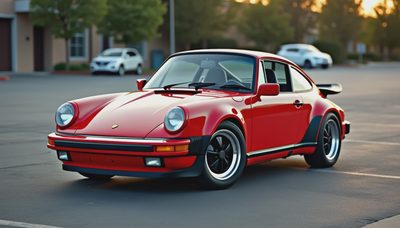
**Porsche 911 (1980s–1990s air-cooled)** – The 911 is the benchmark for a reason. Its rear-engine layout gives it a distinctive handling character, and the air-cooled engines have a mechanical honesty that modern turbos can't replicate. An early 1980s SC or a 1990s Carrera 2 remains usable daily, with parts availability that's excellent by classic standards.
**Alfa Romeo Giulia Super (1960s–1970s)** – Italian elegance with a twin-cam heart. The Giulia Super is lighter than many of its contemporaries and offers a steering feel that's almost telepathic. Rust is the main enemy, but a well-maintained example rewards with an intoxicating exhaust note and a cabin that smells of leather and optimism.
**BMW 2002 (1968–1976)** – The car that defined the modern sports sedan. Its compact dimensions, direct steering, and willing four-cylinder engine make it a joy on a winding road. The 2002 is also surprisingly practical—roomy enough for two adults and a weekend's luggage. It's the epitome of function as beauty.
**Mercedes-Benz W201 190E (1982–1993)** – Often overshadowed by its bigger siblings, the 190E is a masterclass in bank vault build quality. The 2.3-16 Cosworth version is the collector's choice, but even a humble 190E 2.0 offers a ride quality and interior solidity that puts many modern cars to shame. It's a cool classic car that doesn't try too hard.
**Volvo P1800 (1961–1973)** – If you want something different, the P1800 is a Swedish shooting star. Its Ghia-designed body is crisp and timeless, and the mechanicals are robust enough for daily use. The P1800 holds the record for highest mileage on a single car (over 3 million miles), proving that good design and reliability can coexist.
Living with a Cool Classic Car
Owning one of these cars is about more than driving. It's about ritual: the five-minute warm-up before a morning commute, the smell of old leather on a summer day, the wave from another enthusiast at a stoplight. A cool classic car becomes part of your daily landscape. It asks for maintenance, yes—regular oil changes, careful storage, the occasional hunt for a rare part. But that involvement is part of the reward. You learn the car's rhythms, its quirks, the way it behaves on a cold start versus a hot afternoon.
Modern classics like the ones listed above are especially forgiving. They have fuel injection, disc brakes, and enough common parts to keep repair costs manageable. They don't require a specialist mechanic for every job. And because they're not ultra-rare, you can actually drive them without constant worry about value depreciation. The key is to find a well-sorted example and then resist the urge to over-improve it. Restraint, again.
How to Find the Right Cool Classic Car for You
The search is half the pleasure. Start with online marketplaces like Bring a Trailer and Hagerty Marketplace. Read the comments, study the photos, and be patient. A car that has been driven regularly and maintained with records is almost always better than a low-mileage garage queen. Look for evidence of rust repair (especially around floor pans and wheel wells) and listen for transmission noise on test drives. If you're not mechanically inclined, budget for a pre-purchase inspection from a specialist. It's a small cost that saves thousands.
Consider your lifestyle. Do you have garage space? A tolerant partner? A mechanic you trust? The coolest classic car in the world is just a lawn ornament if you can't drive it. Start with something modest—a 2002, a 190E, a Giulia—and learn what you really want. You can always trade up later.
Why Cool Classic Cars Are Worth the Effort
There's a magic in driving something that was built with an idea, not a spreadsheet. The cool classic cars we've talked about here were conceived at a time when designers and engineers had more freedom to prioritize feel over compliance. They have personality. They have flaws. And those flaws are what make them interesting. A modern car might be more efficient, safer, and more comfortable. But it rarely makes you want to take the long way home.
That's the real measure of a cool classic car: it doesn't just get you from A to B. It changes how you experience the trip. The road feels different. Time slows down. And when you park and walk away, you look back. If a car can do that, it's earned its place in your life.
A car should sharpen your life, not overwhelm it. The coolest classics understand that.