The VW Scirocco 1980 represents a sweet spot in automotive design—a car that sharpens your life without overwhelming it. Introduced in 1974 and refreshed for 1980, the first-generation Scirocco was Volkswagen's answer to the growing demand for a sporty yet practical coupe. For those who value proportion, lightness, and everyday usability, the VW Scirocco 1980 remains a compelling choice. Its wedge-shaped profile, clean lines, and restrained detailing make it a car that ages gracefully, asking for attention without demanding it.
Design and Proportion: Why the VW Scirocco 1980 Still Holds Attention
The VW Scirocco 1980 was penned by Giorgetto Giugiaro, and it shows. The low nose, long hood, and steeply raked rear glass give it a planted, purposeful stance that looks more expensive than its original price tag. The side profile is uninterrupted by unnecessary creases—just a simple shoulder line that catches light beautifully. Inside, the dashboard is driver-focused, with clear gauges and a layout that prioritizes function over flash. The materials are honest: hard plastics, durable cloth seats, and a three-spoke steering wheel that feels just right in your hands. It's a cabin that doesn't try to impress, but it earns respect through coherence. Unlike many of its contemporaries, the Scirocco's design feels like it was considered from every angle, not rushed into production.
Behind the Wheel: Driving Feel and Everyday Use
The VW Scirocco 1980 is not about raw power; it's about balance. With the 1.6-liter or 1.8-liter four-cylinder engine, output ranges from 74 to 90 horsepower depending on the market, but the car's weight—around 2,100 pounds—means it never feels underpowered in normal driving. The steering is unassisted, offering direct communication through the thin-rimmed wheel. The suspension, MacPherson struts up front and a torsion beam axle in the rear, provides a compliant ride that still manages to communicate road texture without harshness. On a winding coastal road, the Scirocco dances with agility rather than brute force. It rewards smooth inputs and encourages you to carry momentum through corners. For daily use, the hatchback body offers surprising cargo space; fold the rear seats and you can fit a weekend's worth of luggage or a set of track wheels. It's a car that doesn't punish you for driving it every day—rather, it makes errands feel like small adventures.
Living with a VW Scirocco 1980: Ownership Texture
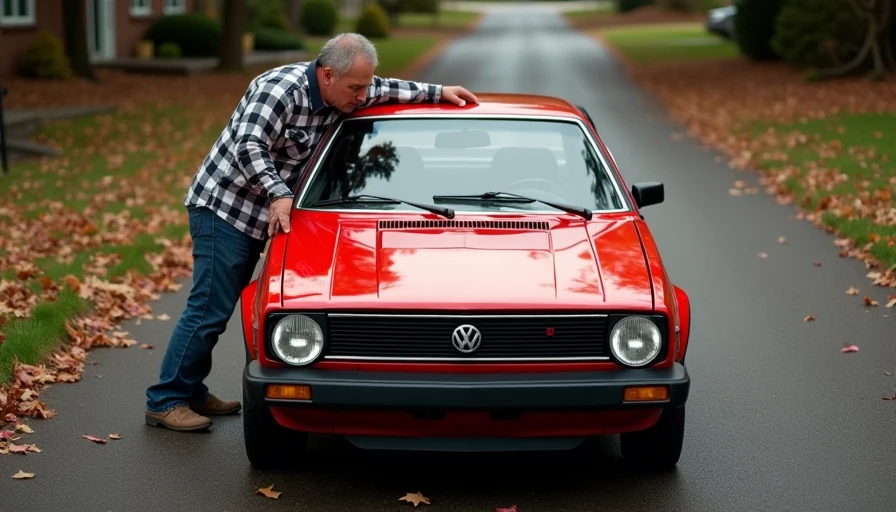
Owning a VW Scirocco 1980 means embracing a simpler era of motoring. Parts are still reasonably available thanks to shared components with the Golf and Rabbit, and a dedicated aftermarket provides suspension upgrades, brake kits, and trim restoration pieces. The most common issues to watch for are rust in the lower door seams and rear wheel arches, as well as aging electrical connections. But these are manageable if you're willing to learn or work with a specialist. The driving experience rewards effort with a sense of connection that modern cars often sanitize away. There's a ritual to starting it—turning the key, feeling the carbureted engine catch, listening to the mechanical symphony of camshafts and valves. It's not loud or aggressive, but it's alive. For the style-conscious driver, the Scirocco 1980 also ages well visually; its lines complement mid-century modern architecture and classic wardrobes. It's a car that fits into a considered life without shouting about it.
What to Look for When Buying a VW Scirocco 1980
If you're considering adding a VW Scirocco 1980 to your garage, focus on authenticity and condition. Originality matters more than perfect restoration; a car with matching numbers and minimal patch panels is often a better long-term investment than one that's been heavily modified. Rust is the enemy—inspect the front floor pans, the rear suspension mounts, and the spare tire well. The engine should start easily and idle smoothly, with no excessive smoke. Drive it and listen for driveline clunks or gearbox whine. The interior trim is hard to find, so a complete, uncracked dashboard and good seat upholstery add significant value. A well-maintained example with service history is worth seeking out, even if it costs a bit more upfront. Prices for clean, unmolested cars range from $6,000 to $15,000 depending on market and condition. That might seem steep for a 40-year-old economy coupe, but the Scirocco's increasing rarity and timeless appeal justify it.
Conclusion: The VW Scirocco 1980 as a Thoughtful Choice
The VW Scirocco 1980 isn't the fastest or the flashiest car of its era, but it's one of the best-proportioned and most livable. It embodies the idea that a car should sharpen your life, not overwhelm it. For drivers who value design integrity, honest mechanicals, and a daily companion that asks little yet gives much, the Scirocco 1980 remains a quietly brilliant choice. Whether you're parking it at a coffee shop or taking it on a weekend escape, it rewards you with a sense of rightness that few modern cars can match. If you're drawn to cars that feel deeply right, the VW Scirocco 1980 deserves a place on your shortlist.