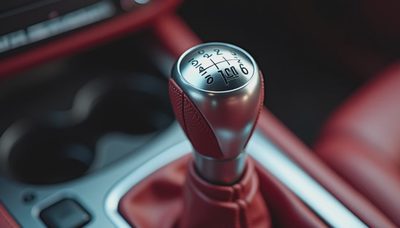
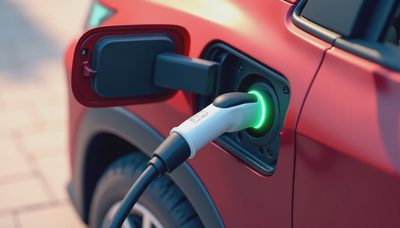
Few mechanical configurations stir the soul quite like a V12 engine. And yet, among the enthusiasts I know, the conversation around V12 engine cars has become quieter, more reflective. The age of twelve cylinders is ebbing—tightening emissions regulations and the shift toward electrification are pushing these monuments aside. But before they disappear completely, it’s worth understanding what makes a V12 so special, and which examples still deserve a place in a discerning garage.
What Makes the V12 Layout So Special
At its core, a V12 is an exercise in balance. By pairing two banks of six cylinders in a 60- or 90-degree vee, engineers achieve near-perfect primary and secondary balance—meaning the engine runs with a smoothness that no V8 or V10 can quite replicate. This isn’t just a technical detail; it translates directly into how the car feels. The power delivery is linear, building with a turbine-like swell rather than a frantic punch. You feel the revs climb with a creamy consistency, and when you’re at the top end, there’s a deep, resonant howl that is unmistakably V12.
Then there’s the sound. V12 engine cars produce a complex harmonic—a blend of intake honk, exhaust texture, and mechanical precision that sounds both organic and engineered. It’s not as raw as a flat-plane V8 or as deep as a twin-turbo V6. Instead, it has a richness that rewards long, sustained pulls. This is an engine built for autobahn cruising, canyon sweeps, and the occasional stretch of open road where you can let it sing.
The Golden Age of V12 Engine Cars
The 1990s and early 2000s offered a remarkable breadth of V12 options. Ferrari had the 456 GT and later the 612 Scaglietti—proper four-seaters that let you share the experience. Lamborghini’s Diablo and Murciélago used massive V12s that felt theatrical and alive. Aston Martin married V12 power to hand-crafted interiors, creating the DB7 V12 Vantage and the gorgeous Vanquish. Even the pragmatic Mercedes-Benz found room for a V12 in the S600 and SL600, proving that twelve cylinders could deliver limousine refinement alongside effortless thrust.
What these V12 engine cars shared was an approach to speed that felt effortless. They didn’t demand constant gear-row; they surged forward with a calm authority. For drivers who valued flow over frenzy, they were ideal. Today, these models are increasingly coveted, not just for their rarity, but for the way they combine usable power with a soundtrack that’s become rare.
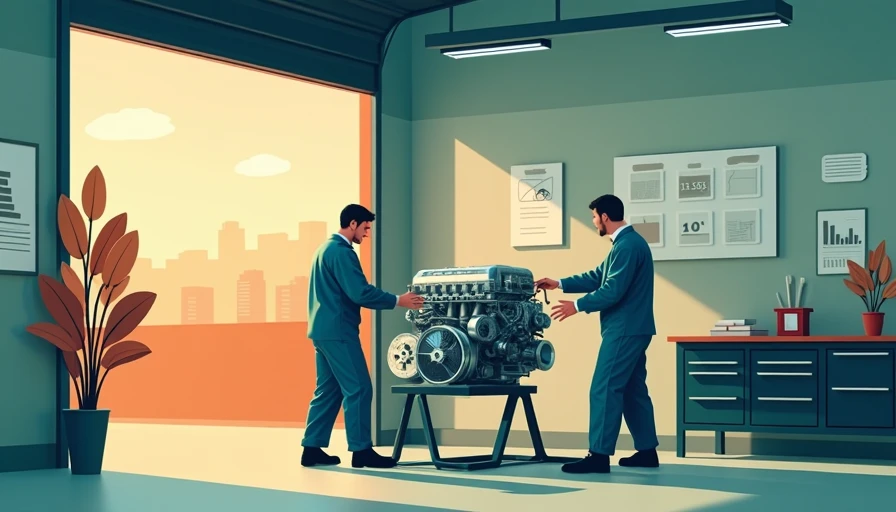
Modern V12s: A Dying Breed Worth Celebrating
The current landscape is thinner, but there are still bright points. Ferrari’s 812 Superfast and the limited-run Daytona SP3 carry the front-engined V12 torch with remarkable flair. Lamborghini’s Aventador, now succeeded by the Revuelto (which pairs a V12 with hybrid assist), proved that a naturally aspirated V12 could remain relevant into the 2020s. Rolls-Royce continued to use a V12 in the Ghost and Phantom, though the brand is now moving to electric. And Aston Martin’s DBS and DB12 still offer V12 power, though rumors suggest it won’t survive the next generation.
These cars are expensive—most start well above $250,000—and they’re not exactly thirst-friendly. But they represent an engineering ethos that prioritized smooth power over peak numbers. That’s not to say they lack performance; the 812 Superfast can sprint to 60 in under three seconds. But the way it delivers that speed is what matters: with composure, with noise that’s musical rather than angry, with a chassis that feels connected to the road.
Living With a V12: The Real-World Experience
I’ll be honest: dailying a V12 car takes some adjustment. Fuel economy rarely exceeds 15 mpg, and the servicing costs can be eye-watering—think six-figure repairs on some older models. But for many owners, the trade-off is worth it. The cabin of a well-sorted V12 car is a place you want to be. The engine idles with a barely perceptible tremor, and the mechanical refinement extends to the steering, the brakes, the quality of the materials. You don’t drive a V12 out of necessity; you drive it because the experience itself is a destination.
There’s also the matter of value. Some V12 engine cars have already begun to appreciate. The Ferrari 612 Scaglietti can still be found in the $80,000–$100,000 range, which is remarkable for a car with a front-mid-engined V12 and a Pininfarina body. The Aston Martin DBS (2008–2012) has dipped below $70,000 for well-maintained examples. These are not cheap, but they are strikingly attainable for what they offer—a piece of automotive history that you can actually use.

Which V12 Engine Cars Still Resonate Today?
If I were to recommend a single V12 to live with right now, it would be the Ferrari 812 Superfast. It’s the last of its kind from Maranello: a front-engined, naturally aspirated V12 with a rear transaxle, hydraulic steering, and a chassis that communicates what the front tires are doing with startling clarity. It’s also surprisingly usable in everyday traffic—the visibility is decent, the ride in Comfort mode is tolerable, and the cabin is beautifully put together.
For the more budget-conscious enthusiast, the Aston Martin DB9 with the V12 is a compelling choice. It offers a more relaxed character than the Ferrari, with that wonderful British interior and a soundtrack that’s more subtle but still deeply satisfying. And let’s not overlook the Mercedes-Benz S600—particularly the W221 generation. It’s the ultimate gentleman’s express: silent, effortless, and built to consume distance. You can find good examples under $30,000, which makes it one of the most affordable ways into V12 ownership.
Ultimately, V12 engine cars are more than an engineering curiosity. They are artifacts from a time when automakers valued character and smoothness above all else. If you have the chance to drive one—to feel that seamless surge and hear that layered exhaust note—take it. The V12 may be nearing its final chapter, but its legacy will endure in the way it makes every journey feel special.